


Traveling with Multiple Pets at Once
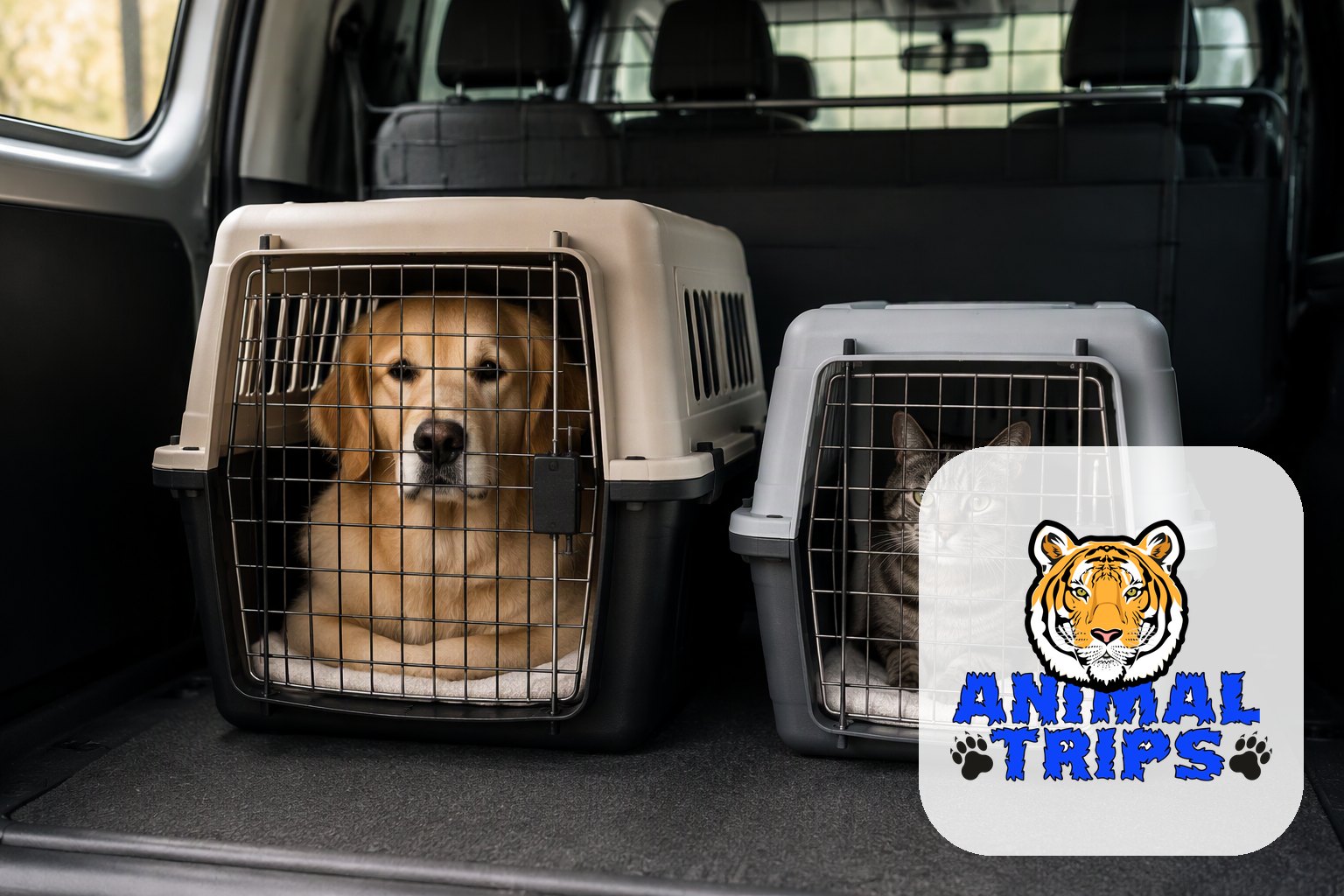
Moving the whole “farm” is a common scenario: two dogs, a dog and a cat, sometimes three cats at once. One trip instead of two saves time and money — but only if the animals are arranged so they cannot hurt each other. We explain when shared transport is a good idea and when it is a disaster.
The base rule: one animal — one carrier
No matter how much the animals love each other, each gets its own carrier for the journey. Three reasons: safety under braking (two dogs in one crate slam into each other), hygiene (you cannot tell who made the puddle or who skipped the meal) and stress (even friends get nervous in a closed space). An exception exists, but it is narrower than you think — more below.
Dog + dog: when they can ride close together
- dogs from the same home that get along well — we place the carriers side by side so they can see and sniff each other through the doors; it is calming;
- dogs that have only just met — carriers in different rows or separated by a partition; do not assume they will “become friends on the way”;
- dogs in conflict — see below, that is a separate protocol;
- big + small — never in one carrier, even if they sleep cuddled at home; in a sudden stop, 30 kg landing on 4 kg is an injury.
Dog + cat: is it even possible
Yes, and we carry such pairs regularly. Rules: the cat always travels in a secure carrier with a double latch, positioned so it does not face the dog directly (a cat reads a dog’s stare as hunting). The dog travels in a carrier or in a harness, depending on temperament. The key is the service order at stops: first the dog out on a leash, the cat’s door stays shut; never the other way round. If your dog has a strong prey drive towards cats, tell us when booking — we will arrange the van so the animals never see each other at all.
Bonded pairs — inseparable pairs from shelters
Adoption foundations often ask us to carry two animals that survived trauma together and panic when separated (more about adoptions in our article on adopting from abroad). Here we make an exception to the “one animal — one carrier” rule, but under conditions: similar weight (difference up to ~30%), a carrier one size larger than the sum of both animals’ needs, no shared water bowl “for two” on the road (resource guarding under stress) and the foundation’s written consent. In practice: two small cats or two dogs under 12 kg ride together well; a pair of 25 kg dogs is better in separate crates placed side by side.
Dogs that fight — the conflict protocol
- separate carriers in different zones of the vehicle — one at the front, one at the back, no eye contact;
- separate stops — each dog comes out in its own turn, never together in the same area;
- separate bowls and pads — nothing shared to quarrel over “through the bars”;
- honest disclosure when booking — conflict is not shameful, it is a route parameter; a hidden conflict is the worst-case scenario of the journey.
Cat + cat and more cats
Cats from the same home usually travel better in separate carriers placed door-to-door: they hear and smell their companion without competing for space. Three cats = three carriers; the “two smaller ones in one” option fails the hygiene check because you cannot establish who ate and who did not. For very anxious cats, a pheromone spray in the carrier 15 minutes before loading — more in our article on travel stress.
Route logistics with several animals
- manifest: each animal has its own card (name, chip, medication, what it eats and what it must not);
- labelled bags: food, treats and medication for each pet separately, with the name;
- vehicle balance: heavy carriers low and near the axle, light ones higher;
- stop plan: with two dogs a stop takes twice as long — a 750 miles route is not “one tight day”;
- documents for each animal separately — read about the paperwork in our documents guide.
What it costs — and when the second animal is cheaper
A second passenger in a car does not double the fuel bill — and it is the same with a second pet. Two animals on one route usually cost 60–75% of two separate trips, because you pay for the vehicle and the road, not per carrier. Request a quote and tell us how many animals travel and how they get along — we will match the layout and the price.
Conclusion
Several animals at once is standard, as long as each has its own crate, its own bag and its own card. Dogs side by side, cats door-to-door, conflicting ones apart, bonded pairs together only at similar weight. Tell us the truth about your pets’ relationship — and the journey will be calm for all four paws.