


How to Get Your Cat Used to a Carrier in 14 Days
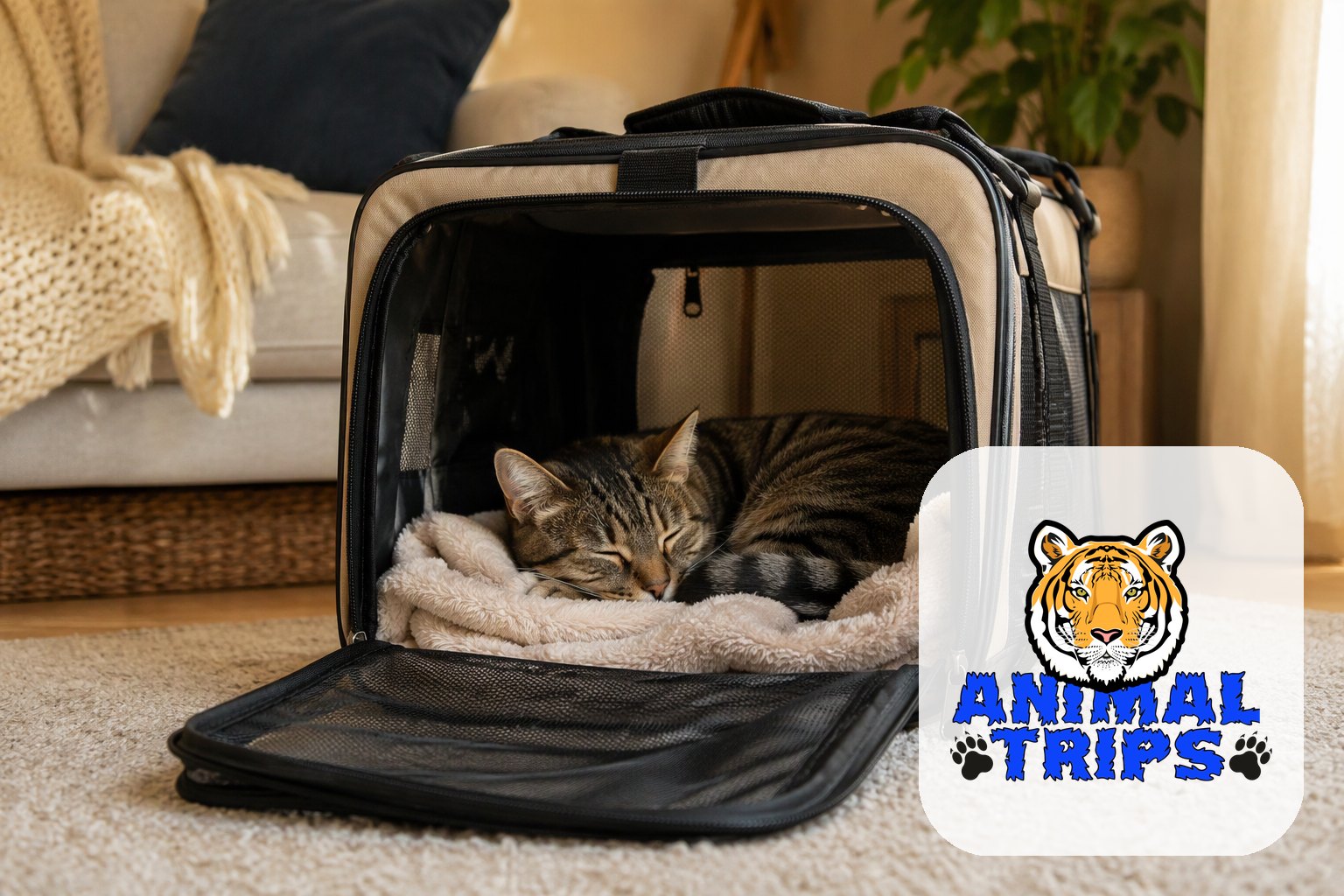
Most cats panic at the sight of the carrier because it appears once a year — before the vet visit. The cat quickly learns: carrier = bad news. The good news: 14 days of calm, regular work is enough to turn the carrier into ordinary furniture. Here is the proven day-by-day plan.
The core principle: the carrier is furniture, not a trap
The whole plan rests on one idea: the cat must decide for itself that the carrier is safe. Never pack, push or slam the door. Work in short sessions (5–10 minutes, twice a day), reward with favourite food and always end on a calm note — even if that means “the cat wasn’t interested today”.
Days 1–3: the carrier in the living room
- place the carrier in the room where the cat spends most of its time — open, with the door removed or fixed open;
- put inside a blanket that smells of the cat and home;
- toss favourite treats next to it several times a day — no commentary, no forcing;
- stage goal: the cat walks past without tension and sniffs the carrier with curiosity.
Days 4–6: food moves inside
- gradually move the treats: first at the entrance, then on the threshold, finally deep inside;
- place regular meals ever closer to the carrier — for the last two days the bowl sits inside;
- play with a wand toy so the cat runs into the carrier after it;
- goal: the cat walks in on its own, unprompted.
Days 7–9: closing the door briefly
- while the cat eats inside, gently close the door for 3–5 seconds and open it right away;
- increase with each session: 10 seconds, 30 seconds, a minute, 3 minutes;
- if the cat meows or thrashes — open after a moment of quiet and step back one stage;
- goal: 3–5 minutes closed with a completely calm cat.
Days 10–11: the carrier moves
- lift the carrier with the cat inside for a few seconds, set it down, open, reward;
- carry it around the flat, then out to the staircase and back;
- calm voice, reward ritual after every “ride”;
- goal: carrier movement causes no protest.
Days 12–13: first drives
- belt the carrier onto the back seat, start the engine, wait a minute, switch off — session over;
- next day, a short drive: 5–10 minutes around the block, then home and the full reward ritual;
- temperature 20–22 °C, quiet, no music; pheromone spray on the blanket 15 minutes beforehand;
- goal: the cat comes home calm, without an hour of hiding under the sofa.
Day 14: dress rehearsal
Run the real-departure scenario: unhurried packing, a 30–40 minute drive, a short stop with water, and back. If the cat took it calmly — protocol complete. The carrier stays at home permanently as a bed: toss a treat inside once a week so the association never fades.
The most common mistakes
- force-packing “right now” — one such episode destroys two weeks of work;
- keeping the carrier in a closet and pulling it out only “for the vet”;
- feeding right before the drive — a full stomach makes the cat motion sick;
- loud coaxing and pulling the cat out mid-panic — it cements the fear.
When pheromones, when the vet
Use Feliway spray (or an equivalent) from day one — on the blanket 15 minutes before each session. If after 14 days the cat still panics in a closed carrier, over-grooms or urinates from fear, discuss travel medication with your vet — always with a home trial before the trip. Read more about recognising stress in our travel stress article.
Cat ready, road ready
An acclimated cat is a different league of travel: sleeps on the road, eats after arrival and causes no drama in hotels. If a long route lies ahead — the USA to the USA or further — see our guide to travelling with a cat and the big departure checklist. And if you’d rather leave the driving to us — request a transport quote with a driver-carer and photo reports.
Conclusion
14 days, two sessions of a few minutes daily, zero force. The carrier turns from a trap into a bed, and the panicky cat into a calm passenger. It is the most worthwhile investment before any trip.