


A Puppy’s First Trip: A Complete Guide
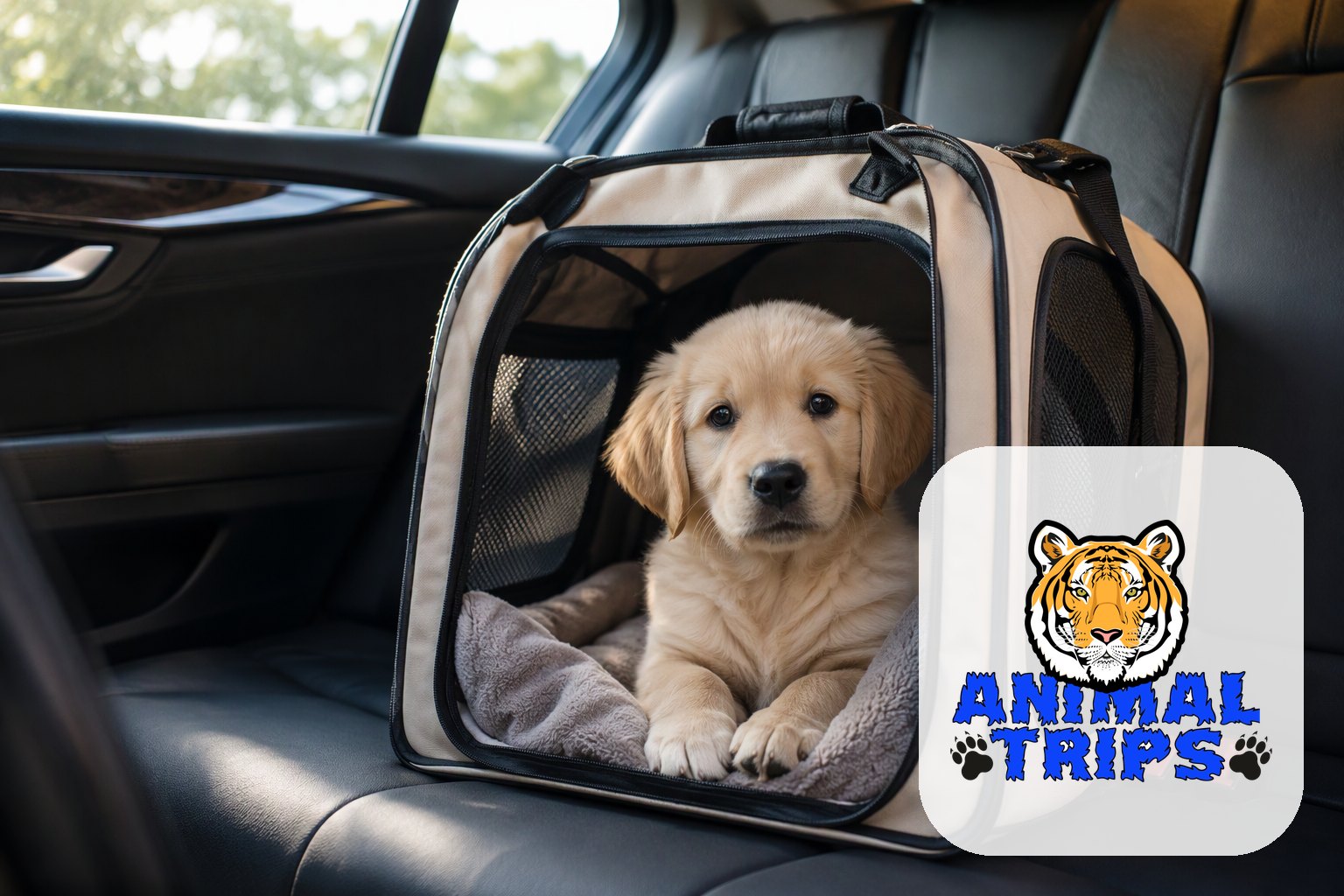
A puppy’s first trip is not just the route from the breeder to your home — it is an experience that shapes the dog’s attitude to the car for life. Well planned, it passes calmly; badly prepared, it leaves the animal fearing every future drive. Here is how to do it step by step.
Before you set off: getting used to the car
Ideally you have 1–2 weeks to prepare. If the pickup is “right now”, skip to the next section — but keep the calm and pace described below:
- days 1–3: the puppy walks into the stationary car on its own (or is carried in), gets treats and goes back home; engine off;
- days 4–6: the same, but with the engine running, for 2–3 minutes;
- day 7+: short drives of 5–10 minutes around the block, ending with something pleasant — a walk or play.
The golden rule: end every session before the puppy starts to fret. Five calm minutes beat fifteen minutes of crying — the dog remembers the last feeling.
Carrier or lap? Safety first
In the USA the rules do not prescribe a single method, but they require the animal not to interfere with the driver. Veterinary practice is unanimous: a carrier or crate belted onto the back seat is the safest option. Alternatives:
- soft/hard carrier — best for a puppy up to ~5 months; place it on the back seat and secure it with the seatbelt;
- car harness + belt — for bigger puppies of medium and large breeds;
- a passenger’s lap — acceptable on a short leg, but risky in hard braking: a 5 kg puppy at 31 miles/h becomes a projectile with ~250 kg of force;
- front seat with an active airbag — off-limits: the airbag can kill the animal even inside a carrier.
Departure day: the hourly plan
- 3–4 h before: the last full meal — a full stomach plus motion equals vomiting;
- 30 min before: a walk and a toilet break;
- 10 min before: put the favourite blanket and a cloth carrying the mother’s/kennel’s scent into the carrier (ask the breeder in advance);
- en route: temperature 20–22 °C, no loud music, stops every 1.5–2 hours for water and a toilet break;
- on arrival: first a calm tour of the new home, then the joy and games.
Motion sickness in puppies
Until about 6 months of age the vestibular system is still developing, so young dogs get carsick more often than adults. Signs: drooling, yawning, whining, vomiting. The strategy:
- short, frequent training drives before the long trip;
- fresh air (window cracked open 2–3 cm), no car air fresheners;
- the puppy faces “forward” — place the carrier sideways to the direction of travel;
- if vomiting persists — a vet can prescribe Cerenia (maropitant); never give “human” medicines without consultation.
What to pack (checklist)
- carrier + a spare blanket;
- hygiene pads (at least 5–8);
- water from home (a change of water plus stress equals stomach trouble) and a travel bowl;
- food for 2–3 days — do not change the diet on moving day;
- poo bags, paper towels, enzymatic spray;
- leash and collar with a tag carrying your phone number;
- treats for rewarding calm behaviour;
- health booklet and documents — if you are crossing a border, read our articles on travel documents and the vaccination schedule: a puppy legally crosses an EU border no earlier than ~15 weeks of age.
A long haul from the breeder (e.g. the USA–the USA)
If the journey takes more than 8–10 hours, you have three realistic options:
- split the route over 2 days with an overnight at a pet-friendly hotel — the healthiest choice for the puppy;
- drive in shifts with a second person — one minds the puppy, the other drives;
- book a specialist transport — we collect the puppy from the breeder and deliver it to your door with a photo report; details in the article on transporting puppies and kittens.
Common mistakes of new owners
- taking the puppy out of the carrier because it “cries” — the dog learns that crying opens doors; stop, calm it with your voice, open only at a parking spot;
- feeding “to soothe” on the road — a straight path to vomiting;
- loud fussing and panicking — your stress is contagious; speak calmly, as on an ordinary walk;
- first contact with the new home = a party with guests — the puppy needs sleep, not congratulations.
Bottom line
The first trip is the foundation. A belted carrier, an empty stomach, stops every 2 hours and your calm — that is the whole recipe. If the route is long or crosses a border, request a transport quote — we will bring the puppy from the breeder to your home and you will get photos from every stage of the journey.