


Transporting Exotic Pets: Rules and Permits
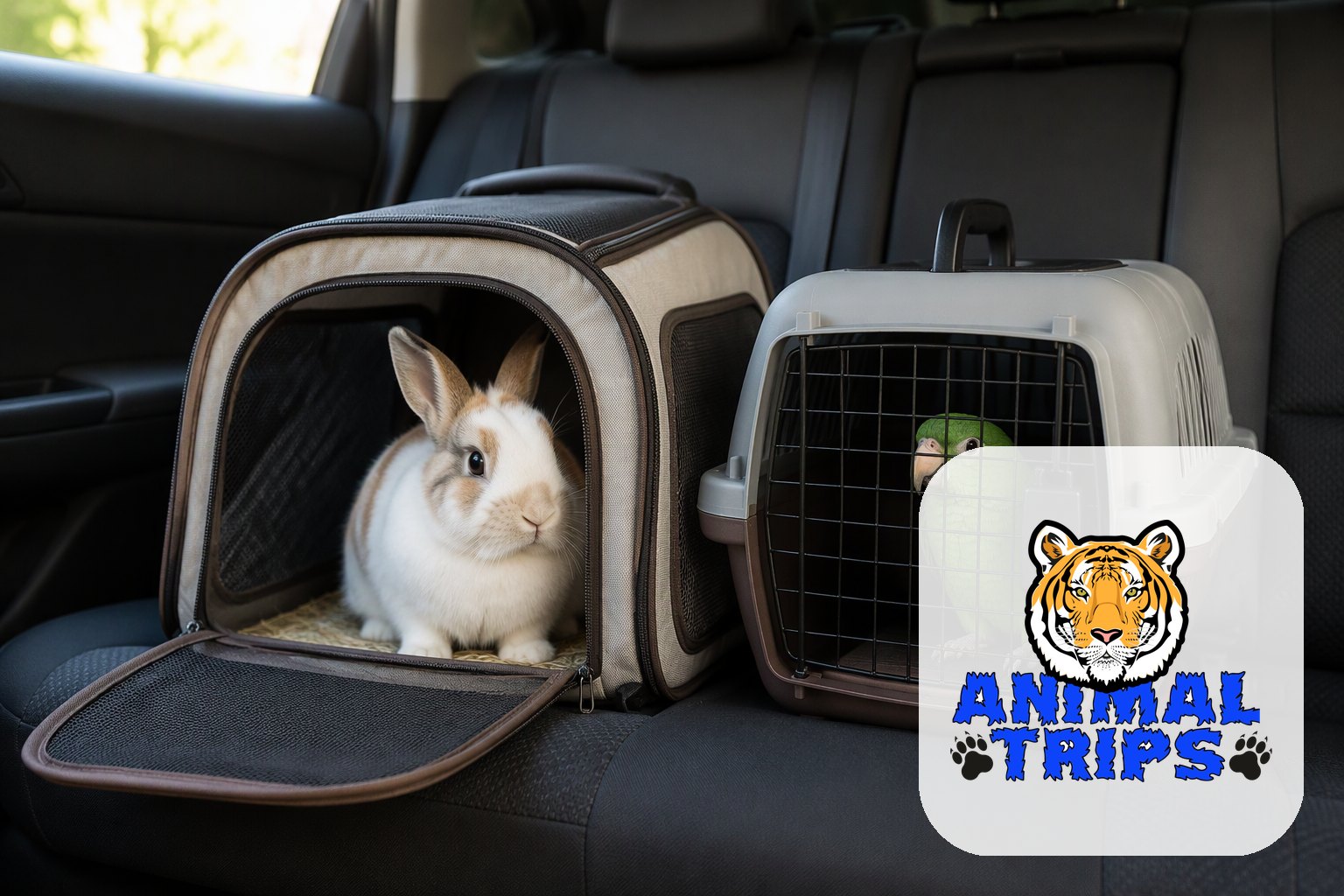
For dogs and cats, EU rules are clear — but what about a rabbit, a ferret, a parrot or a gecko? Here the regulations are less known, and a border mistake is costly. We explain who travels under the same rules as dogs and cats, where CITES begins and how to prepare an exotic passenger for the road.
Who counts as “exotic” under the rules
EU Regulation 576/2013 on the non-commercial movement of pet animals covers exactly three species: dogs, cats and ferrets. That matters: a ferret crossing an EU border needs a microchip, a rabies vaccination and a passport — just like a dog (details in our documents article). Everything else — rabbits, rodents, birds, reptiles, amphibians, fish — is transported under the national rules of the destination country, not one harmonised European scheme.
Rabbits and rodents
- formally: there is no EU-wide chip and passport requirement, but some countries (especially for commercial transport) ask for a vet health certificate — issue it no earlier than 48–72 hours before departure;
- practically: rabbits tolerate heat badly — above 26 °C it becomes dangerous; a closed carrier with absorbent bedding and hay, no water bowl while moving (a ball-type drinker);
- breaks every 2–3 hours in the shade, watch the breathing: rapid breaths and an open mouth are a warning sign;
- guinea pigs and hamsters travel in small dark carriers — darkness calms them.
The ferret — an “honorary cat”
The ferret is the only “exotic” with full EU passenger rights: chip, rabies, passport, the 21-day rule after the first vaccination — everything like a dog. The journey is similar too: a carrier with a litter tray, water breaks, temperature 18–22 °C. Note: some ferrets get motion sick — the carrier-acclimation protocol is in our travel stress article (it works for ferrets too).
Birds
- documents — parrots and ornamental birds are often covered by CITES (the convention on trade in endangered species): species in Appendices I and II need certificates; ordinary pet birds usually need only a health certificate;
- carrier — a small dark cage or a fabric cover over the cage; perch at a fixed height, feeders attached, no loose toys;
- temperature — birds handle cool air better than draughts; never place the cage in the air-conditioning flow;
- breaks — birds do not eat or drink while moving; offer water only at stops.
Reptiles and amphibians
- CITES first — tortoises, geckos, snakes and monitor lizards are often listed in the convention’s appendices; without a certificate the animal will be stopped at the border — the most common cause of confiscation;
- temperature is life — reptiles are cold-blooded: on the road they need 24–30 °C depending on species; insulated containers (polystyrene), chemical heat packs and a thermometer inside;
- container — closed, ventilated, no loose substrate (spillage risk); a damp towel for amphibians;
- do not feed — stop feeding 2–3 days before departure: a full stomach plus motion means digestive trouble.
CITES — how to check your animal
Go to the Species+ database (speciesplus.net), enter the species’ Latin name and check the appendix. Appendix I = trade banned, movement only with export and import permits; Appendix II = allowed with certificates. CITES paperwork is arranged in the departure country — in the USA through the marshal’s office, in the USA through the relevant regional authority — so start at least 4–6 weeks before the trip.
A shared practical list for every “exotic”
- a vet health certificate (even when not required — it smooths border conversations);
- a photo of the animal and documents on your phone;
- a labelled carrier: species, name, your phone number;
- spare bedding, water and food for +2 days;
- a route plan with breaks — our method from the big travel checklist works for small passengers too;
- checking accommodation rules — not every pet-friendly hotel accepts a snake: see our hotels article.
When to hire a professional
An exotic animal is a zero-error zone: one hour at the wrong temperature can cost a reptile its life, and a missing CITES certificate can cost your bird its freedom. On the the USA–the USA route we carry rabbits, ferrets, birds and reptiles in climate-controlled carriers, with temperature monitoring and photo reports — request a quote. How the journey runs is described in the USA–the USA step by step.
Conclusion
An exotic passenger does not mean more bureaucracy — it means different bureaucracy. The ferret travels like a dog, the rabbit and rodent need a certificate and shade, the bird and reptile need a CITES check. The rest is care and temperature. Have a safe trip!