


Flying with a Dog: IATA Rules Guide
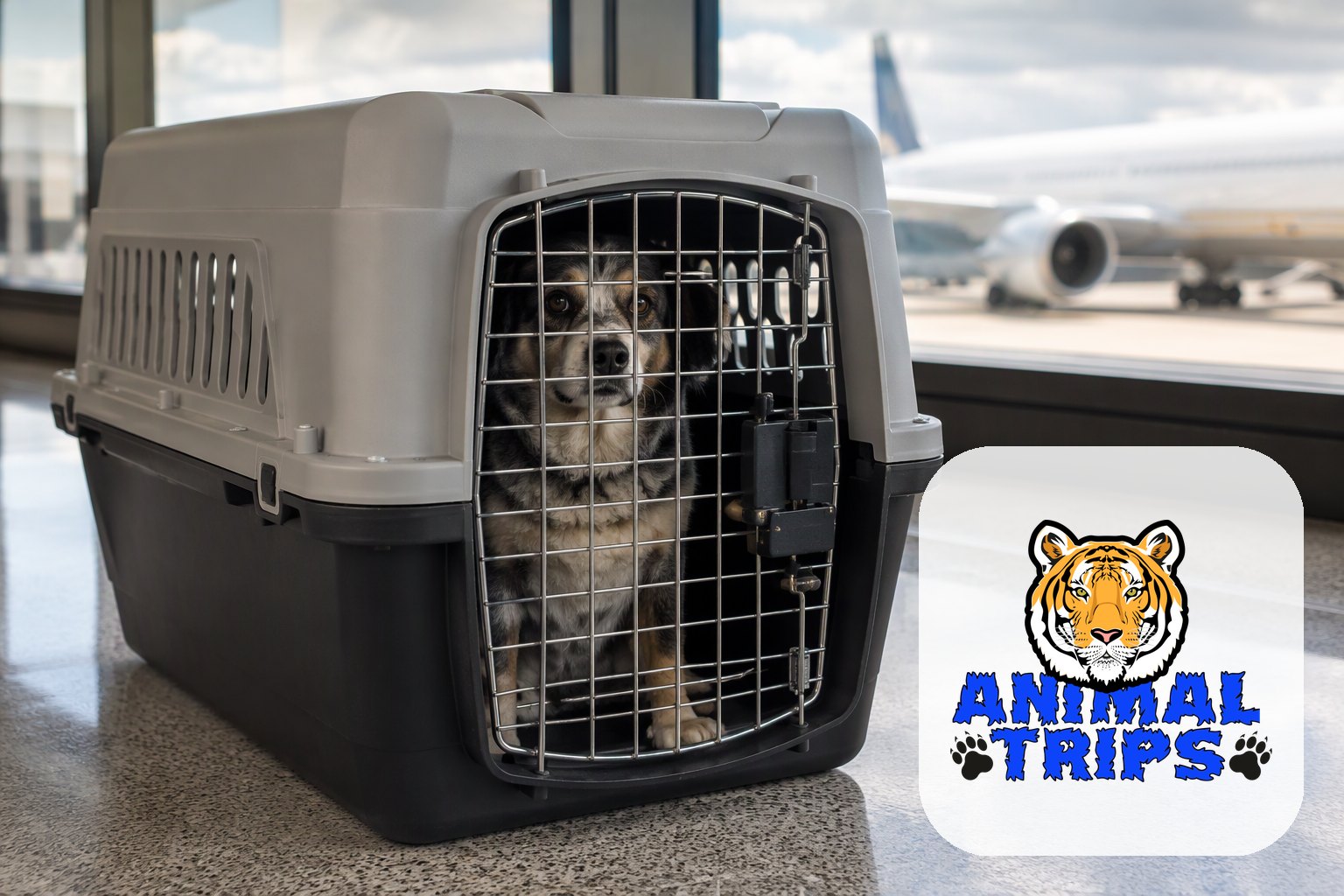
Flying with a dog is a completely different puzzle from a road trip: its own carrier dimensions, its own weight limits, its own vocabulary (PETC, AVIH, cargo) and airlines that refuse animals at short notice. This guide lays out the IATA rules and shows how to plan a flight without nerves — or consciously choose the road instead.
Three ways to fly — and who decides
- PETC (in the cabin) — for animals up to about 8 kg in a soft carrier; the bag fits under the seat and the animal stays inside for the whole flight;
- AVIH (in the hold, as checked baggage) — a rigid IATA crate, same aircraft as you; not offered by every airline or on every aircraft type;
- Cargo (manifested) — the animal travels as freight, handled by a cargo agent; required for large dogs, routes with connections outside the EU, and when the airline does not offer AVIH.
The decision comes down to weight plus crate dimensions — and the policy of the specific airline, because each has its own limits, price list and list of excluded breeds.
The IATA crate — detailed requirements
- size — the animal stands naturally, turns around and lies down with legs extended; add headroom above the head (a standing dog’s ears must not touch the ceiling);
- construction — rigid walls (fibreglass or hard plastic), metal door, ventilation on 3–4 sides, bolts instead of plastic clips;
- floor — leak-proof, with an absorbent layer (pad, blanket); a litter tray for a cat;
- equipment — two bowls (water and food) attached to the door, “Live Animals” stickers and directional arrows;
- bans — wheeled carriers (unless wheels are removed), snap-lock fasteners, prong collars and leashes inside.
Documents for the flight
- microchip + pet travel document set + valid rabies vaccination — the same standard as road travel (details in our documents article);
- a “fit to fly” health certificate from a vet — some airlines require it issued 7–10 days before the flight;
- a reserved space for the animal — the limit is 2–4 animals per flight, so declare it when buying the ticket, not “at the airport”;
- for flights beyond the EU — the destination country’s requirements (serology tests, import permits, quarantine); start 2–4 months ahead.
Brachycephalic breeds — the excluded list
Flat-faced dogs and cats (bulldogs, pugs, Persians) are not accepted in the hold or cargo by most airlines because of respiratory risk during pressure and temperature changes. Some carriers allow them in the cabin if they fit the weight limit — details and alternatives are covered in our brachycephalic breeds article. For these animals, the road remains the safest option.
Departure day — the procedure
- last meal 4–6 hours before the flight, water until check-in;
- a long walk before leaving for the airport;
- check in with the animal 2–3 hours before departure (cargo: 4–6 hours at the cargo terminal);
- do not give sedatives without airline approval — many carriers ban sedation because it is dangerous at altitude;
- pheromone spray on the blanket, on the other hand, is a definite yes.
What it costs — roughly
- PETC in the cabin: $50–120 per segment;
- AVIH in the hold: $100–300 depending on weight;
- cargo: from $300 up, plus agent and terminal fees;
- compare with the road — for a medium-sized dog, road transport the USA–the USA can be cheaper than cargo and far less stressful (pricing logic in our pricing article).
Typical refusals — and how to avoid them
- “crate too small” — measure your dog and calculate with the IATA formula before buying the container;
- “no animal spaces on the flight” — book in advance and reconfirm by phone 48 hours before;
- “breed excluded” — check the airline’s list before buying your ticket;
- “temperature embargoes” — in summer and winter airlines suspend hold acceptance during extreme temperatures at connecting airports; choose direct flights at cooler times of day.
Plane or road — an honest comparison
The plane wins on time (3 hours of flight vs 2 days of driving) but loses on stress: hold noise, separation at check-in, crate requirements. The car wins on control: breaks, contact, temperature, a familiar driver. For routes up to ~1 miles — like the USA–the USA — most animals handle the road better than the flight. If you choose the ground, request a transport quote — we take your pet door-to-door with photo reports.
Conclusion
Flying with a dog is a project: an IATA crate, advance booking, a “fit to fly” certificate, awareness of breed and temperature exclusions. If any point does not add up — the road is the healthier alternative. Safe travels, in the sky or on the ground!