


Dog Car Sickness: Causes and Remedies
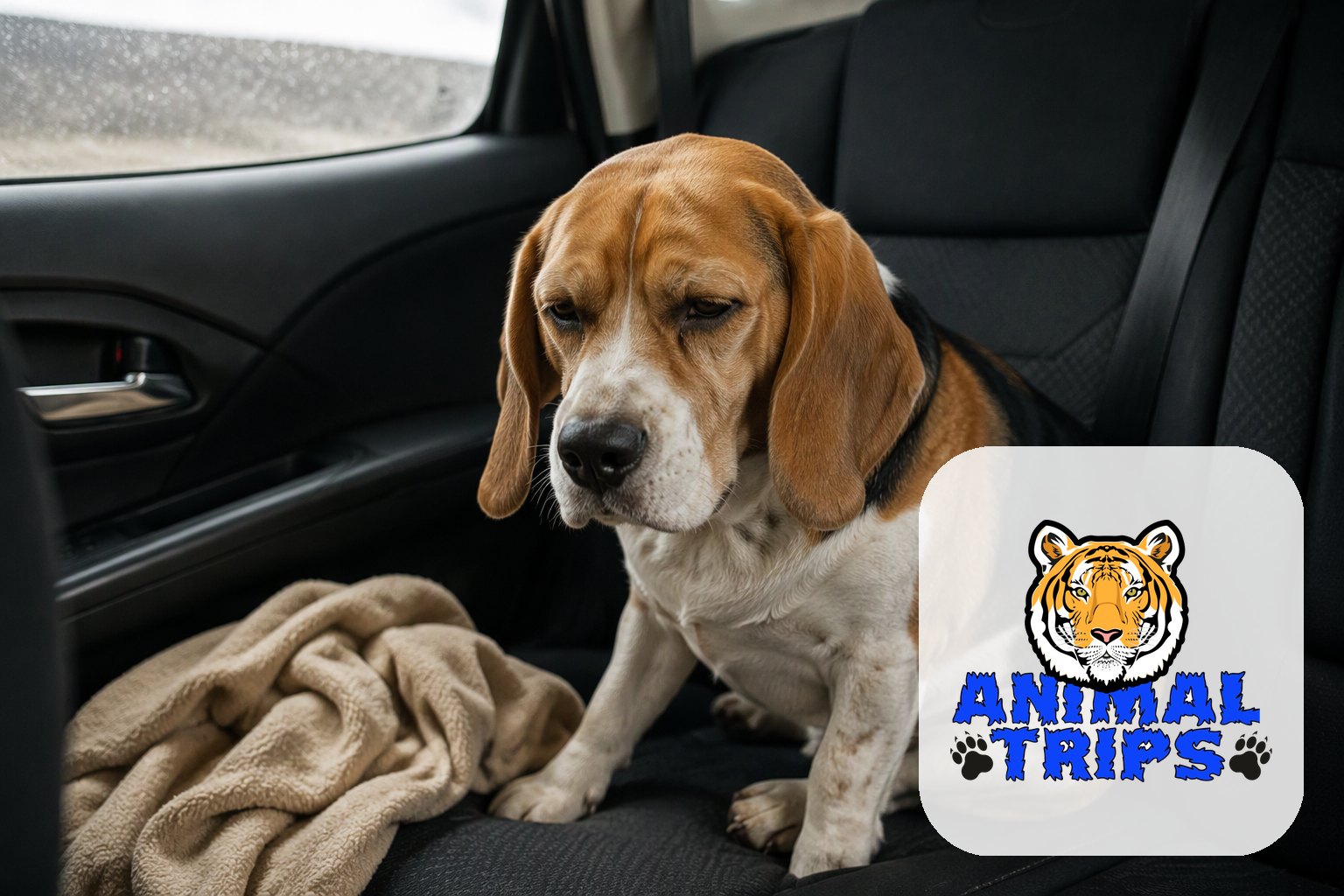
Drooling, yawning, vomiting ten minutes into the drive — that is not “being difficult”, it is motion sickness (kinetosis). It affects up to a third of dogs, especially young ones. The good news: most animals can be trained out of it, and for hard cases there are effective medicines. Here is what works and what only entrenches the problem.
Where kinetosis comes from
The vestibular system in the inner ear registers movement the eyes cannot see: the animal sits in a carrier staring at a motionless wall while its body feels accelerations and turns. The signal conflict triggers the vomiting centre. In puppies and kittens the vestibular system is still immature, so they suffer most — and that is why most “grow out of it” by 12–18 months, provided aversion has not set in earlier. In adult dogs kinetosis often has a psychological component: the car is associated with nausea, and stress itself triggers the symptoms.
Signs — from subtle to obvious
- early — yawning, lip licking, drooling, restless repositioning, whining;
- middle — rapid breathing, trembling, refusing food even an hour after the ride;
- full — vomiting, diarrhoea, stress urination;
- in cats, instead of vomiting: loud continuous meowing and over-grooming.
Important: if symptoms appear at the sight of the car, before it even moves — that is fear, not pure kinetosis, and it is treated primarily with training (see our travel stress article).
Vestibular training — 3–4 weeks
- week 1 — the car as a living room: meals and play in the parked car, engine off;
- week 2 — engine running, 1–2 minutes without moving; then 5 minutes of driving around a quiet neighbourhood;
- week 3 — 10–15 minutes of driving to a pleasant destination (park, beach), never “around the block” ending back home;
- week 4 — 30 minutes with a stop and reward on site;
- iron rule: end the session before symptoms appear — the ride must finish while the animal still feels good.
Ride organisation that helps immediately
- last meal 3–4 hours before departure, water until the last moment;
- dog in a carrier or harness on the back seat — a stable body means less sensory conflict;
- carrier positioned sideways to the direction of travel, covered on three sides;
- fresh air: window cracked 2–3 cm, temperature 20–22 °C;
- calm, predictable driving without sharp acceleration — a “grandpa driver” beats a rally driver;
- breaks every 1.5–2 hours — the exact schedule is in our big checklist.
Medication: Cerenia and other options
Cerenia (maropitant) is the only medicine officially registered for dogs against travel vomiting: a tablet 2 hours before the ride, on a light stomach, works up to 24 hours, does not sedate. The vet sets the dose by weight. For cats it is sometimes used off-label — only on veterinary advice. Ondansetron helps in stubborn cases. Gabapentin eases the anxiety component, especially in cats. What to avoid: human “sea sickness” remedies with dimenhydrinate without consultation (risk of sedation and paradoxical agitation) and any medicine “for the first time on departure day” — always run a home trial a few days earlier.
Natural methods — what makes sense
- ginger (biscuits or capsules for dogs) — mild antiemetic effect, good as support;
- pheromones (Adaptil/Feliway) — reduce the stress component, not kinetosis itself;
- adaptation to motion: swings for a puppy, rocking in your arms, controlled “spinning” games;
- CBD and herbs — weak evidence, lottery-grade product quality; discuss with your vet.
When the vet is a must
If vomiting also happens outside the car, the animal loses weight, drools without driving, or symptoms suddenly appear in an adult dog that used to travel well — it may be a vestibular disease, a digestive or neurological problem, not ordinary kinetosis. A vet visit before a long trip is then obligatory.
When the road cannot wait
If departure is in a week and training has only just begun — do not experiment. We carry dogs with kinetosis in a special mode: driving at night or at dawn (the animal sleeps), covered carrier, hourly breaks, Cerenia after consultation with your vet. Request a quote and mention in the form that your dog gets motion sick — we will plan the route around it.
Conclusion
Kinetosis is a mechanism, not a character trait. Young animals grow out of it, adults train out of it, and medicines insure the hard routes. The worst strategy is giving up driving — then fear wins. Training, comfort and, when needed, Cerenia: this trio solves 9 cases out of 10.