


Transporting Large Dogs: Rules and Tips
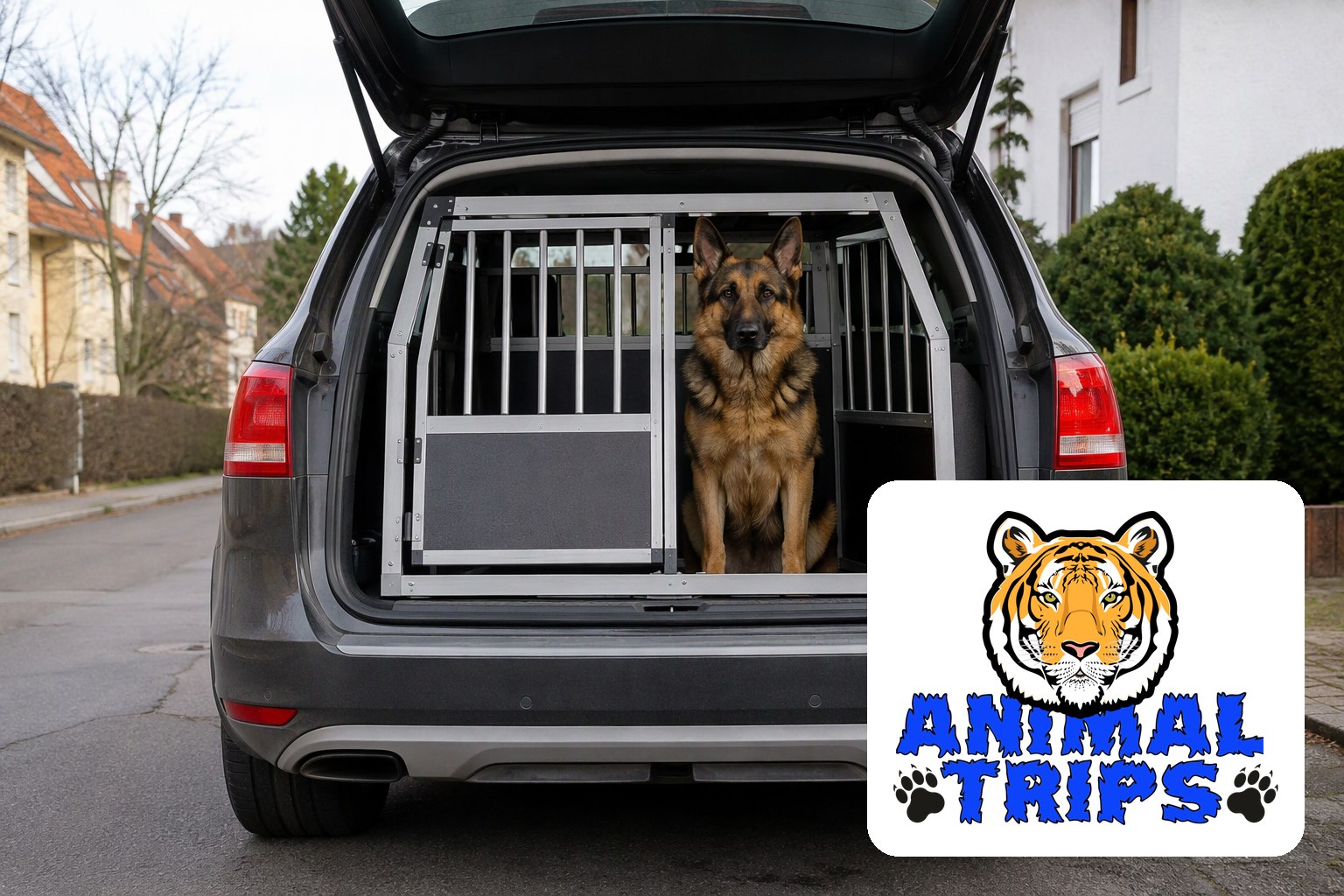
A shepherd, Labrador, husky or Saint Bernard will not fit in a carrier “under the seat” — a large breed means separate logistics, from crate dimensions to the strength of the restraints. We have collected everything you need to know about transporting a dog over 20–25 kg: by car and by plane.
The crate: size is not comfort, it is a requirement
The IATA rule is simple and strict: the dog must be able to stand at full height without touching the ceiling, turn around and lie down stretched out. How to measure your dog:
- A — from the tip of the nose to the base of the tail;
- B — from the ground to the elbow;
- C — width at the widest point;
- D — from the ground to the top of the head or the ear tips (erect ears).
Crate length = A + ½ B; width = 2 × C; height = D. For large breeds this usually means XL–XXL crates (91–122 cm). A crate that is too small means refusal of carriage at the airport or a stressed animal for the whole drive.
By car: securing 30–40 kg on four paws
- a crate in the boot of an estate/SUV — strapped to the factory lashing eyes; a “loose” crate slides like a projectile under braking;
- a boot guard or net behind the seat backs — an extra barrier during a sudden manoeuvre;
- a ramp — a 40-kg dog jumping in “from a standstill” ruins its joints; a folding ramp weighs 4–6 kg and saves the dog’s hips and your back;
- an anti-slip mat in the crate — a big dog “floats” across a smooth floor under braking;
- breaks every 3–4 hours: large breeds suffer more from prolonged joint immobility.
By plane: the cargo hold and its rules
A dog over 8 kg (with crate) almost always flies in the heated cargo hold. Airline requirements: an IATA-compliant crate (metal fittings, a water bowl fixed inside, absorbent bedding), the same documents as for road transport plus often a health certificate issued 48–96 hours before the flight. Note: some airlines do not accept short-nosed breeds (boxer, bullmastiff) in the hold — always check the carrier’s list.
Molossers and guard breeds: muzzles and temperament
- a basket muzzle (not a nylon “loop”) — the dog can pant and drink in it;
- when handing the dog to a transport company, long “half-hour goodbyes” increase stress — hand over calmly and quickly;
- crate-train your dog in advance — an adult 60-kg molosser that refuses is a physical problem, not a training one; see our crate acclimation protocol.
Documents and health: what officers look at
The set is the same as for small breeds: passport, microchip, valid rabies vaccination. But for dogs over 25 kg border services more often ask about the purpose of the trip and ownership documents (puppy export, change of owner). If you are travelling “to a show” or collecting a dog from a breeder — prepare confirmations in advance.
What it costs and why more than a small dog
A large breed takes the space of 2–3 standard cabins and requires a second handler at stops. Hence the higher price — but it includes the transport crate, the ramp, a stop plan and insurance. Exact ranges are in the article how much dog transport across Europe costs.
Entrust a big dog to big hands
We transport shepherds, Labradors, huskies and molossers on the USA–Europe routes every day: XL–XXL crates, ramps, two people at loading, temperature monitoring. See our dog transport by car service or tell us which breed you are moving — we will quote the route within 24 hours.