


How to Crate Train Your Dog in 14 Days Before a Trip
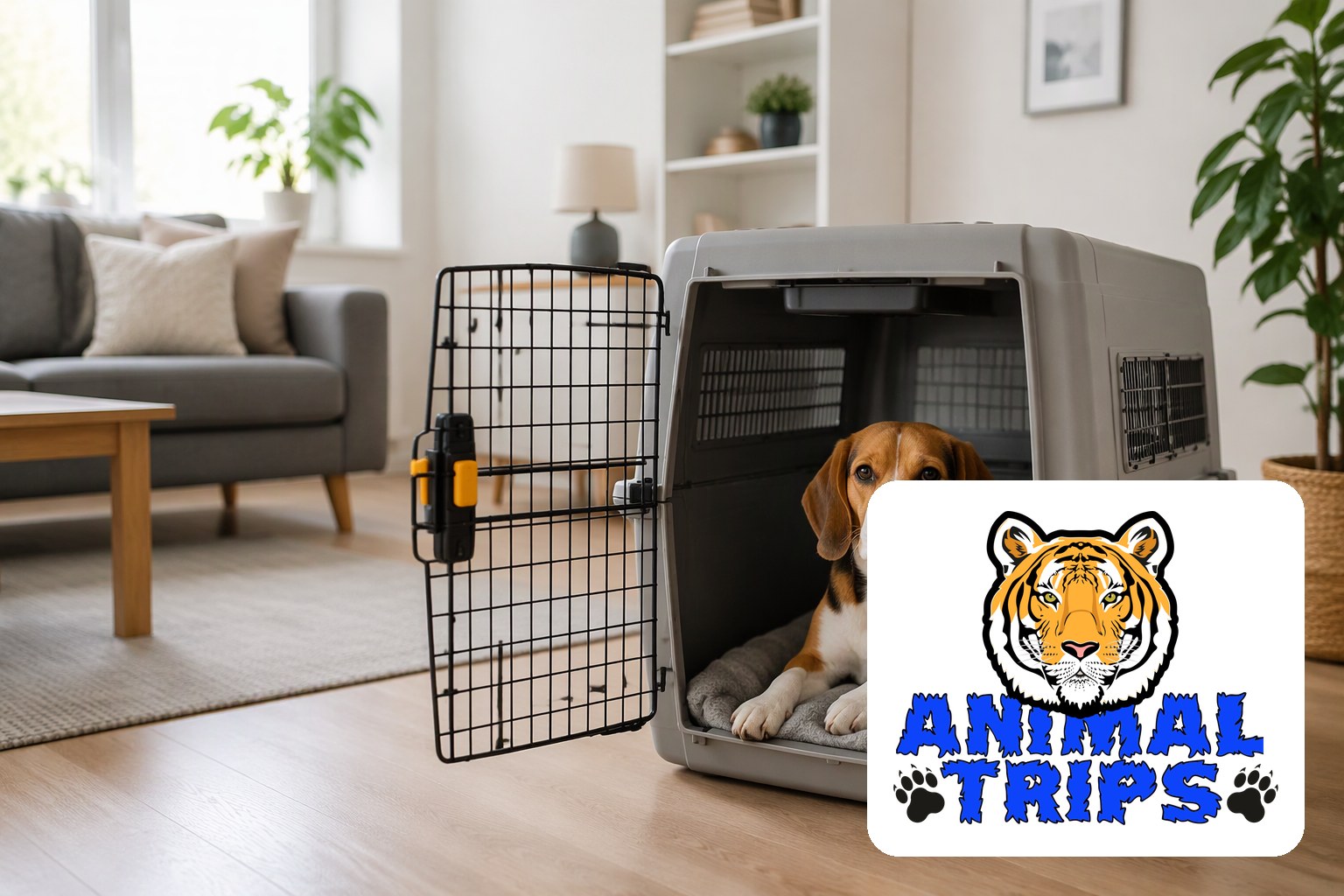
A dog that panics at the sight of a carrier turns every trip into a nightmare — for the dog and for you. The good news: dogs learn faster than cats, and 14 days of short, calm sessions are enough to make the carrier mean safety, not prison. Here is our proven day-by-day plan.
The golden rule: the carrier is a bed, not a trap
The whole plan is built on one idea: the dog must decide on its own that the carrier is a good place. No shoving, no slamming the door, no punishment. Train in short sessions (5–10 minutes, 2–3 times a day), reward with treats and always end on a success — even the tiniest one.
Days 1–3: the carrier as furniture
- place the carrier in the room where your dog spends most time — open, with the door removed or fixed open;
- put a blanket that smells of home and a favourite toy inside;
- toss treats nearby several times a day — no rush, no forcing;
- stage goal: the dog approaches and sniffs the carrier without tension.
Days 4–6: food moves inside
- gradually move the treats: at the entrance, on the threshold, deep inside;
- move the regular food bowl closer each day — for the last two days the dog eats inside;
- introduce a cue such as “bed!” — reward every entry;
- goal: the dog enters the carrier on cue and on its own.
Days 7–9: closing the door briefly
- once the dog finishes a meal inside, close the door for 5–10 seconds and open it before any worry appears;
- increase the time gradually: 30 seconds, one minute, 3 minutes, 10 minutes;
- stay in sight, then briefly leave the room;
- goal: the dog rests calmly in a closed carrier for 10–15 minutes.
Days 10–12: movement and the car
- carry the closed carrier a few steps — reward calmness;
- carrier in the car, engine off — the dog sits inside for 5 minutes;
- same with the engine running — getting used to sound and vibration;
- goal: no stress reaction to being carried or to a parked car.
Days 13–14: first drives
- a 5-minute drive around the block — play and a reward afterwards;
- a 15–20 minute drive to a pleasant place (park, lake);
- goal: the carrier and the car predict good endings.
Big dog? Same rules for a boot crate
For large breeds the carrier is replaced by a secured crate or transport cabin in the boot. The protocol is identical — we simply skip the carrying stage and instead practise hopping into the car via a ramp.
Most common mistakes
- the carrier only appears for “bad occasions” — the vet, moving house;
- forcing the dog in “because we have to go”;
- pitying and soothing a panicking dog — this reinforces fear;
- rushing: cramming every stage into 3 days instead of 14.
No time to train?
If the trip is soon and your dog still fears the carrier, let us do this work. At Animal Trips we acclimate dogs to their travel cabins before every long route, and on the road we watch over rest and hydration. See our dog transport by car service or contact us — we will find the best solution for your dog.